
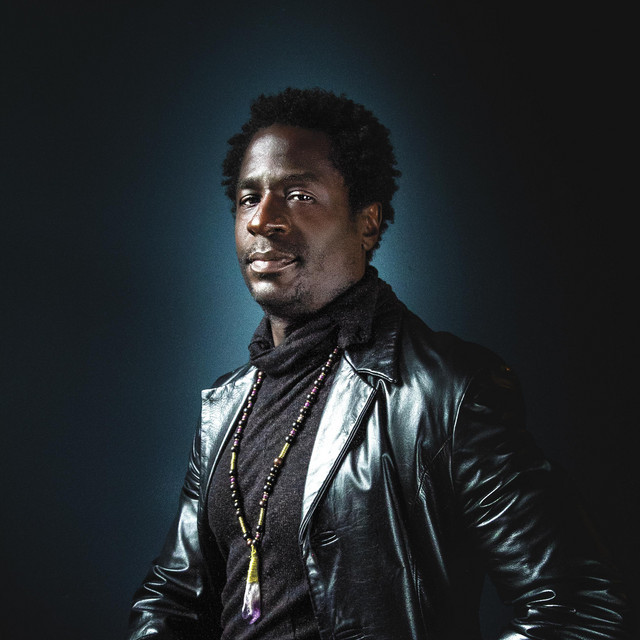
While at Pitchfork, I had the joy of talking to Ray Angry, a keyboardist, producer, and all-around talented musician. He currently plays with The Roots and has worked with artists ranging from D’Angelo to Esperanza Spalding. I wanted to get his perspective on being a musician, particularly the difficult parts that no one wants to talk about.
KP: Reading through that interview was kind of amazing for me, because, personally, music is so important to me that it can be very painful sometimes.
RA: Painful in what sense? Like practicing painful? Like, “FUCK, can’t get this lick. I know that pain.
KP: That is painful. Oh my god, we’re gonna talk about that more later, but in the sense that it’s like, I have like, tied my whole identity into this. So, I become very critical of everything that I do.
RA: It’s an emotional sport.
KP: It is. It is.
RA: Like, that makes sense, right? Yeah, I can’t believe I came up with that phrase. I gotta like, write that down.
KP: You should. You gotta practice and practice and practice.
RA: It takes so much emotions to deal with the heartache of not getting it, you know what I mean? Or, not getting a gig, or, you know, not getting that one opportunity that you’re like, “Oh man I’m gonna be in this band”, and you don’t make the band. You know, I remember one time I auditioned for Lady Gaga. And I didn’t get it. My friend got it. I was so happy for my friend; it was perfect for him. But I was so mad I didn’t get that gig. And the guys who were doing the auditions, you know, like the way they were running it, I kind of felt like, “Oh, man, they’re conspiring against me. They don’t want me to win.” I was so emotional. It’s like, man, you know? And then Lady Gaga, you know. I remember during the audition, I was playing something. And she was like, “Yeah, see, he’s listens! He listens!”, you know? And she said that about me. And then I found out I didn’t get the gig. I was depressed.
KP: That’s heartbreaking. God that’s a big gig, too.
RA: Thank God I didn’t get it. Because, you know, I would not have had the opportunities that I have now working with The Roots, working with all these other bands. I started my own record label. You know what I mean? I’m doing musical film and television. So, thank God, thank you. Thank you to the guys that auditioned me for Lady Gaga and told me I didn’t get the gig.
KP: That’s good to have perspective.
RA: Time gives you perspective!
KP: Absolutely.
RA: Let me write that down. Yeah.
KP: When I was reading through your interview, and I was recognizing each step of the journey that you were taking, like, going to music school, moving to New York. And when you get to New York, you’re in the middle of it, like you have to find gigs for yourself, you have to put yourself out there. How do you do that? I mean, I know you got to just do it. I know with jazz specifically, you know, there’s going to be jam sessions after gigs, like you can find out through word of mouth, but like how do you find playing opportunities for other genres?
RA: That’s a great question. My answer for that is you have to come to New York and come to Producer Mondays. [Laughs] So basically, Producer Mondays is something I started very recently. You meet people, like all my friends that I’ve worked with over the years, you know, sometimes Common has come through, a lot of dope musicians, some of the best musicians in the world come through. So, when you as an artist, when you go up on stage, you perform. So basically, it’s a jam session. But, it’s not a jam session. It’s more like a writing session, you know, and it’s a listening session, because I feel like with jam sessions, no one’s listening. Everyone’s trying to be seen.
KP: Exactly.
RA: So, I created a listening session where you can play and connect with folks. And then it’s sort of like you’re talking with someone and you find out, “Oh, I need a bass player”, and you got a fucking gig. So many people have gotten work, just being at Producer Mondays, you know. So, for me, that’s what I’m doing. Creating opportunities for people, such as yourself, who was like, “Yo, how do I do it?” Like, it’s literally just doing it. Yeah, just saying, “Fuck it.” You know, just putting yourself out there, introducing yourself to someone. You know, there’s a musician who you might admire. Now, granted, sometimes, people might be mean, or they might be dickheads, whatever. Don’t worry about that. Just keep doing your thing. Keep putting yourself out there. Because eventually you’re gonna find your tribe. And you’re going to find people that you connect with, and then someone’s going to meet you and wonder the same thing, “How do I do it?” You got to do the same thing, you know?
KP: No, I really like that about music, specifically. Because people can be really brutal sometimes. But for the most part, there’s always mentorship, there’s always trying to just hook your friend up with something else. And it’s always give and take.
KP: Well, we talked we mentioned practicing earlier, which I don’t know how to describe it. It’s, it’s crazy. It’s hard. It’s a trial of your patience and your determination.
RA: How bad do you want it?
KP: Exactly, exactly. So, what has what has your relationship been with practicing through the years? And what’s it like now? And, you know, how do you do it?
RA: So, I still practice. And I think you never stop practicing. And I think, over the years, I’ve learned how to practice. There are ways to practice, you know. And also, being creative with your practice. And making your practice section sessions musical.
KP: Yeah. Because you can’t go in there and just play scales and be done, because that’s not applicable.
RA: Yeah. I mean, you have to play scales. [Laughs]
KP: Yeah, of course. But you got to be creative, like with inversions.
RA: Yeah, exactly. Just being able to move around on your instrument.
KP: So why keyboard?
RA: It started when I was a kid. After church one day, I just started as a bunch of kids were playing piano. And I just started messing around. I just gravitated towards the piano. It’s like a love-hate relationship [laughs]. I wanted to learn so badly and I couldn’t play. I started taking lessons. Then I started studying classical music. And, you know, classical music is very demanding. But I just kept studying and kept practicing. I just love music so much. You know, why the piano? Because I love music. I love creating.
KP: Do you think it really depends on what instrument you’re playing in the industry? Does that offer you different opportunities or does it just depend on who you are?
RA: Both. And how good you are. [Laughs] I’d say I think the most important thing is not the instrument—it’s your connection to this, man. And it’s like, what serves you best and what helps you to express yourself is the most important thing. Because when you’re able to do that, then the opportunities come. Because then, people want to connect with you because they’re like, “Oh, this person really understands this aspect of music.” We could both touch the same instrument and sound different. So, it’s not the instrument. Yeah. It’s your experience that you bring to it.
KP: That’s interesting. I talked with Christian McBride, and I asked him a similar question. Well, it was a different question. But it led to similar things.
RA: He’s a good friend of mine.
KP: Oh my God, he was amazing. But I asked him, “What do you do when you when you play and you hate everything that comes out of it?” And he said, “It’s not a problem with what you’re playing, It’s probably you.”
RA: Yeah, it’s true, because the instrument is just a tool. You’re the architect. You know, if you want the building to be a certain height, fucking make that height, but it’s definitely the mindset. And I think meditation is really important. Because here’s the thing, right? The thing about meditation. Sometimes, when you’re making music, and you’re in your head so much, you need to quiet your mind. You get to that point where you feel like, “Oh, I hate everything.” Just put it down, and just go do something else. And come back to it. And just meditate. Because what that does, it just gives your brain a chance to relax, and, you know, it’s an emotional sport. So, if you’re emotional about it, then it sort of like, gets heavier and heavier and heavier. And at some point, you’re gonna have a breaking point, where you want to be like, “Man, fuck the bass all together.” You don’t want to get to that point, you know? So, I think it’s best to take a break. Even for me when I’m writing, I have writer’s block. Sometimes it’s best to walk away. You know, even great composers will do that, they will. You know, we’re working on something. We’ll take a stroll in the park or just go be out in nature. I think it’s definitely best to keep your mental shit. You need a break.
KP: Well, I guess the last thing I just wanted to ask you was what’s it like? I mean, because you’ve produced and worked with so many different people, like just a wide range of people. I know that you really care about being a versatile musician. Like having all the branches out to different parts of the music industry, I guess.
RA: Because someone told me I couldn’t do it. I’m gonna do it. Of course.
KP: But specifically, with producing, how do you work with all those different people and you’re comfortable with it? How do you familiarize yourself with just so many different types of music and knowing the idioms and the little nuances of every different part. You know what I’m saying? RA: I just love music. I’m saying, I love music, like in every sense of the word. Like when I hear a great artist, or, for example, I met this architect yesterday. He’s from Chicago. Incredible architect. And I was excited meeting him. You know what I mean? I love people that create something out of nothing. When I’m working with different artists, sometimes they’re my heroes. And I’m like, “I can’t believe I’m like, working with Queen Latifah! I’m in a studio with Queen Latifah!” Yeah, you know what I mean? So, I just I’m just grateful that I have the opportunity to even be in the room with some of my heroes. It’s about learning and growing and trying out new things. So that’s what I’m always doing. Yeah, just do it. Okay, cool. All right.