
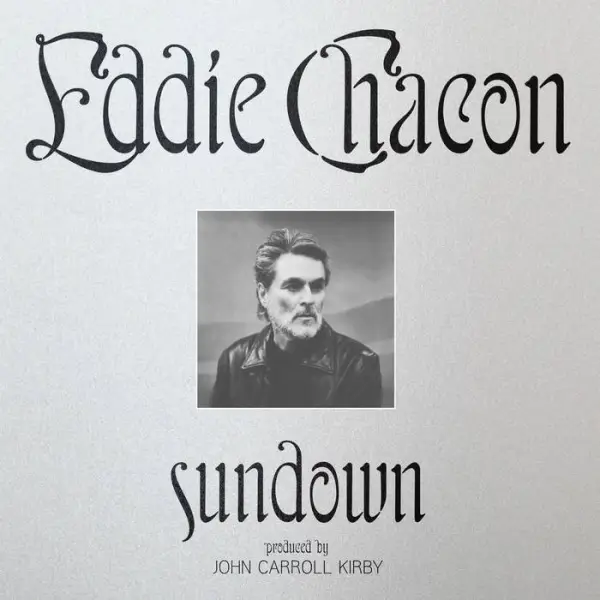
DJ MOONSTRUCK: All right. So your first release as a solo artist was in 2020, just three years ago with the single, my “Mind was Out of Its Mind”. And that was about 20 years after your time in Charles and Eddie. What brought you back into the idea of recording and releasing music again?
Eddie: It actually wasn’t my idea. I had taken a meeting with a mutual friend of John Carroll Kirby and I, in the hopes of helping out a friend of mine who was a struggling musician, and this guy was the owner of Terrible Records, a record label out of Brooklyn that had put out music by Solange and Blood Orange and, and John [Carroll Kirby]. And at the end of the meeting he said, “What’s your story?”. And I gave him, like the 60 second abbreviated version of my 40 years in the music business. He just said, “We should try to get you back in the music business.” And I got in my car and I was like, “That’s weird, whatevs.” You know? Um, and then a few days later, he’s like, “I have this hair brain idea. I have no clue what the guy will think, but I just think that you and this guy, John Carroll Kirby would really hit it off.”
And then, it took a few months, but he put together a coffee meeting between the two of us. And, um, and that little coffee meeting, which I thought would be about 20 minutes, turned into a three hour meeting that migrated from the coffee shop to the car, and us, like putting across music ideas and me sort of telling him like things I wanted to sing about. And I think I was even like singing melodies to him that I had in my head. Yeah. And that’s how that all got started. So I really wasn’t trying to be a musician or an artist. I hadn’t been doing it for a few decades [laughs].
DJ Panda: Yeah, it was definitely a while. Obviously your sound had changed a lot. [It] reminds me a lot of, like, Connan Mockasin, Nick Hakim, who I’m both fans of. Was John Carroll Kirby one of your main influences in that change of sound?
Eddie: I actually only knew John Carroll Kirby through the amazing work that he had been doing with all these great artists to launch. And… yeah, he had been working with all the cool artists, many of whose records I was listening to. But yeah, I certainly benefited from, I can remember from the very beginning, he would say, “Do you want to come over and jam?” And I would come over his house not knowing the purpose of any of this. I thought, “Yeah, I’ll come over and hang out and jam.” And he would play me these sick tracks and then kind of just spin his chair around and hand me a microphone and say, do you want to sing? And I would, I would just kind of like riff out and write lyrics and make up these songs over the top of these amazing tracks. And those tracks became Pleasure, Joy and Happiness. So I don’t know that either one of us really knew that this was gonna turn into a record that would wind up, you know, catching buzz and, and sort of taking me all over the world, really. That’s great. I think it came from a very whole, I’d say it actually came from a very wholesome place. I think neither one of us had any expectations other than that. “Let’s play.”
DJ MOONSTRUCK: Nice. Yeah. And, speaking of your music, sort of taking you places maybe further than you might’ve expected, I remember Nick Hakim reworking “Above Below” a few years ago, hearing that on the soundtrack to Atlanta. What has stuff like that, what has it been like just for your music to make its way into a mainstream position [once again]?
Eddie: You know, when I was younger, I had done a lot of like, super mainstream stuff like, Charles [Pettigrew] and I had a song in the nineties and, you know, Tarantino’s True Romance, and I think Super Mario Brothers and a bunch of other, those kind of like full-on mainstream Hollywood movies. But certainly like with this, this go round, I didn’t expect that anyone would hear the record at all. I just basically wanted to get closure on what was sort of a disappointing end to a promising music career in the nineties. It kind of wound up being sort of having sort of “Would I Lie To You” and Charles and Eddie went from being like a number one smash hit to being kind of like “one-hit-wondery.” And that was, that was disappointing.
I was hoping to get a more positive closure on something that I had spent my whole life doing from the time I was a child. So I really wasn’t looking for Pleasure, Joy and Happiness to make me famous or, or spread my name around the world. I was just wanting to make something lastly that I would be really proud of and could feel like at least I went out on my own, um, terms, you know? So yeah, to have these kind of things happen is quite surprising to me. It’s surprising that such a quiet, meditative record could sort of find an audience and, even find its way into like an awesome series like Atlanta, which is one of my favorite shows. I’m like totally so late in the game that I didn’t start watching it until I found out that my song was gonna be in it. Um, yeah. So, yeah, I was pretty blown away [laughs].
DJ Panda: How did you find that people found it…like obviously that was a surprising thing for you, that it came out of passion. What avenues did people find your music again, [so that] it kind of blew up?
Eddie: I really, really, you know, you’ve always heard this kind of thing that no matter how much money a movie company or a music company spends on PR, I’ve always heard this saying that there is no PR in the world as valuable as word of mouth. And I really think that in the case of Pleasure, Joy and Happiness, we actually [laughs], we were a tiny mom and pop business, me and Jack, my manager who had a small record company that he’d only put out one other record on, and we just put the record out ourselves because nobody, frankly, nobody else wanted it. You know, we sent it to a bunch of like, mature indie [record labels], and they all sort of came back with this confused look like, well, where’s, where’s the hits? Where’s the bangers? You know? And I was like, well, it’s not supposed to have any, it’s like a linear record. It’s very like quiet and meditative and supposed to recharge your batteries. And they were just confused by that. So we just decided to put it out ourselves, but we didn’t have any money for PR. So I guess thank goodness that the way people found the record was just by telling each other about it.
DJ Panda: Definitely the best, definitely the best way to find good music, that’s how I’ve found my favorite records ever.
Eddie: Mm-hmm. I think me too, to this day. I think my favorite records are things that my friends tell me about.
DJ MOONSTRUCK: Yeah. And I found Sundown from, my friend showed me a sub that he reads and I read the first issue that they had released that week, and it was your interview with Blackbird Spy Plane. And so that, that’s how I found you.
Eddie: I love that.
DJ MOONSTRUCK: Yeah. And I, I just thought it was great, and I checked out the record and loved it so much. So yeah, that was very cool. That was my PR for you.
Eddie: Yeah. I didn’t know what Blackbird Spy Plane was, and then I told a few of my friends, oh, this guy wants to interview me, and my friends were like, “Oh, I love Blackbird Spy Plane, dude, you gotta do it. It’s totally cool.” I was like, okay [laughs]. And it really was nice. The guy was just like, amazing. And we did wind up having a really nice conversation.
DJ MOONSTRUCK: Yeah. So I also, I wanna ask about, kind of your experience working with John Carroll Kirby on these past records. Do you feel like it compares to your experience working with Charles Pedigree in the 1990s?
Eddie: It only compares in that, I feel lucky that once again, I found a musical partner that there’s like an intangible magic that happens when I get in the room with him. There’s just such, um, chemistry. And I had that with Charles. I’ve only had that, uh, a couple times in my long music career. I’ve had it three times, two times with musicians, Charles and John Carroll Kirby, and then one time with a very famous producer record executive in Scandinavia, who we made a lot of great records together over the years. He just had such a good ear for matching me with people that he thought I would do well with. So I’ve been very, very, you know, I think I’ve been luckier than most in that regard, even though three great matches over a period of 30, 40 years doesn’t sound like that much, but, you know, we can do, we were able to do, a great body of work between me and these three great musical partners that I’ve had over the years.
But you asked, uh, if I could compare the relationship. They’re very different. And I was much younger when I was working with Charles. Charles and I operated in the stratosphere, uh, or I would call it like this kind of rarefied airspace of like major record labels and everything, big gigantic budget, um, and this sort of thing. And it’s very different from like, me just going over to John’s house and it’s very like, it’s very like bedroom, bedroom, recording, lo-fi the way we start out and build our demos. And then eventually we do go in the studio and bring in the great, great musicians that we love who are friends of ours. And the final product is of course very high-end and beautiful, but the way that we get to it is very, very different.
DJ Panda: Mm-hmm. Yeah. Makes, makes sense. And I know you recorded part of Sundown in Ibiza where you’ve also filmed a music video. So how did the recording process find its way all the way over there?
Eddie: Actually Instagram [laughs], the magic of Instagram. Somebody DMed me, a really nice guy, DMed me and said, “Hey, your record Pleasure, Joy and Happiness really helped me and my family. My wife and my children got through Covid and we want to give you a gift, and we would like you to come and stay in our house in Ibiza, and we won’t be there, but you, it’s a big house and you can bring whoever you want. And, and the only thing that I ask is that you do something creative in the space, so if you wanna record or make a video or whatever you want to do, but something creative.” And, I didn’t know who he was, so the first thing I did is set up a phone call, got on the phone call with him, and found him to just be an absolutely lovely and sincere guy. I asked John [Carroll Kirby] if he wanted to come out to Ibiza, and he did, and we just went for it. And we went and stayed in Ibiza for three weeks and put a little recording studio in one of the bedrooms, and, uh, we had a lot of fun, and would also just meander into that bedroom and create these beautiful songs together.
DJ Panda: That is so great. That’s amazing to hear. Yeah.
Eddie: It was very fortunate.
DJ MOONSTRUCK: That is, yeah. That is incredible.
DJ Panda: Lots of trust too [laughs].
Eddie: Yeah, yeah, you’re right about that. I mean, you know, you, you start out getting a DM from a stranger and you’re like, what is this? But, his name is Ian Vent, and he’s actually become a very good friend of mine. So much so that I’ve gone back to the house, um, since then and visited him and hung out with him, and we’re actually friends now. So it’s just a lovely experience all around.
DJ MOONSTRUCK: Yeah. Do you feel like recording in a, in a swanky place like that, uh, affected the recording process a lot?
Eddie: That’s a really good question. I do. I must say, I do think that “Holy Hell” and “Morning Sun” and, and some of the songs on Sundown do have a bit more of a swanky vibe to them. They’re a bit more like, they’re kind of like grooving really nicely. And so yeah, that was kind of a nice little spice to add to the sauce, I would say.
DJ Panda: I think, do we just have one question left…Has there any, has there been any recently released album or song that you’ve been really liking recently?
Eddie: Let me think, actually. I think, um, I come from a songwriter background. That’s what I did for many years. I was a staff songwriter for all the big publishing companies for 18 years. So I often get taken in by what I think is this incredible songwriting. And the song that just blew me away the most over the last few years is that song, “Kill Bill.”
Yeah. I love that song, man. I, you know, once in a while, you know, a song will come out that I’ll be like, man, I’ve never written a song that good. Mm-hmm [laughs]. Yeah, that one really got me. I love it. It’s so creative and, and loose and free and sexy, and it’s just vibey. Mm-hmm.
DJ Panda: Well, the bass on it is just like, so great too. Just like, powerful.
Eddie: It’s so thick, man. And the, and the lyric is so funny and playful. It’s everything you kind of strive for when you’re trying to make something great, you know, loose and, and it’s just got all the qualities, I think.
DJ Panda: Unfortunately, it looks like our, our [meeting] time is quickly ending. But this has been fantastic.
Eddie: Thank you both. It’s been a real pleasure.
DJ Panda: It’s been so great. Is there anything you’d like to, um, say to the listeners of XYC? Um, obviously you’re talking about sharing music by word of mouth, so hopefully this gets you out there and spreads your music.
Eddie: Keep sharing music. Yeah. I would just say keep sharing music you love everybody, and thanks for listening. Have a beautiful day.