
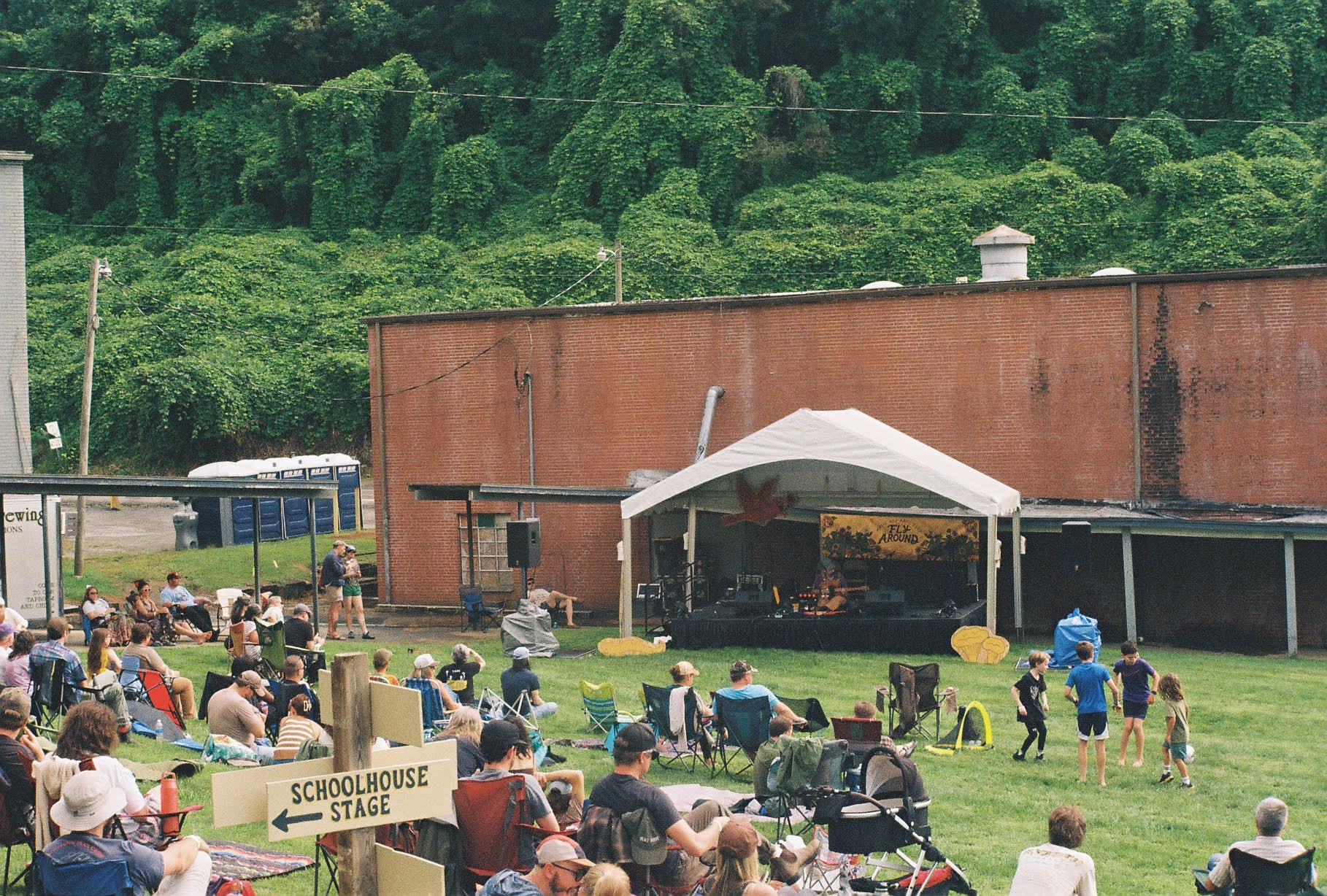
Lansing, North Carolina, is smaller than a small town. It only has the right half of a main street. To the left, Big Horse Creek, with year-round frosty waters, flows to the New River. The commercialized quarter mile of NC Highway 194 is home to a coffee shop, pizza oven, bar, tea store, and most recently, Bunny and the Beaverman. This secondhand store opened just two months before the second annual Fly Around Festival. It’s owned by Peter Farley and his wife Emily, who were ecstatic about their biggest day of business so far. They purchase their storefront the day Helene hit, but Peter believes Lansing’s passion for art and community ensured their success as FEMA funding was consolidated around the larger cities.
Fly Around Fest began in 2025 to fundraise for Lansing from within. Visitors discover the town and stimulate local business, and community members can connect and inadvertently “donate” as their ticket proceedings are redistributed to resurrect the old school building into the Lost Province Center for Cultural Arts. Right now, it’s the perfect image of southern gothic—hand-layered stone, bowed hardwood floors, exposed wall framing, and a spine-tingling draft. It will soon be completely renovated, but I will miss the ephemerality of a space lost to time that is just beginning to be habitable.
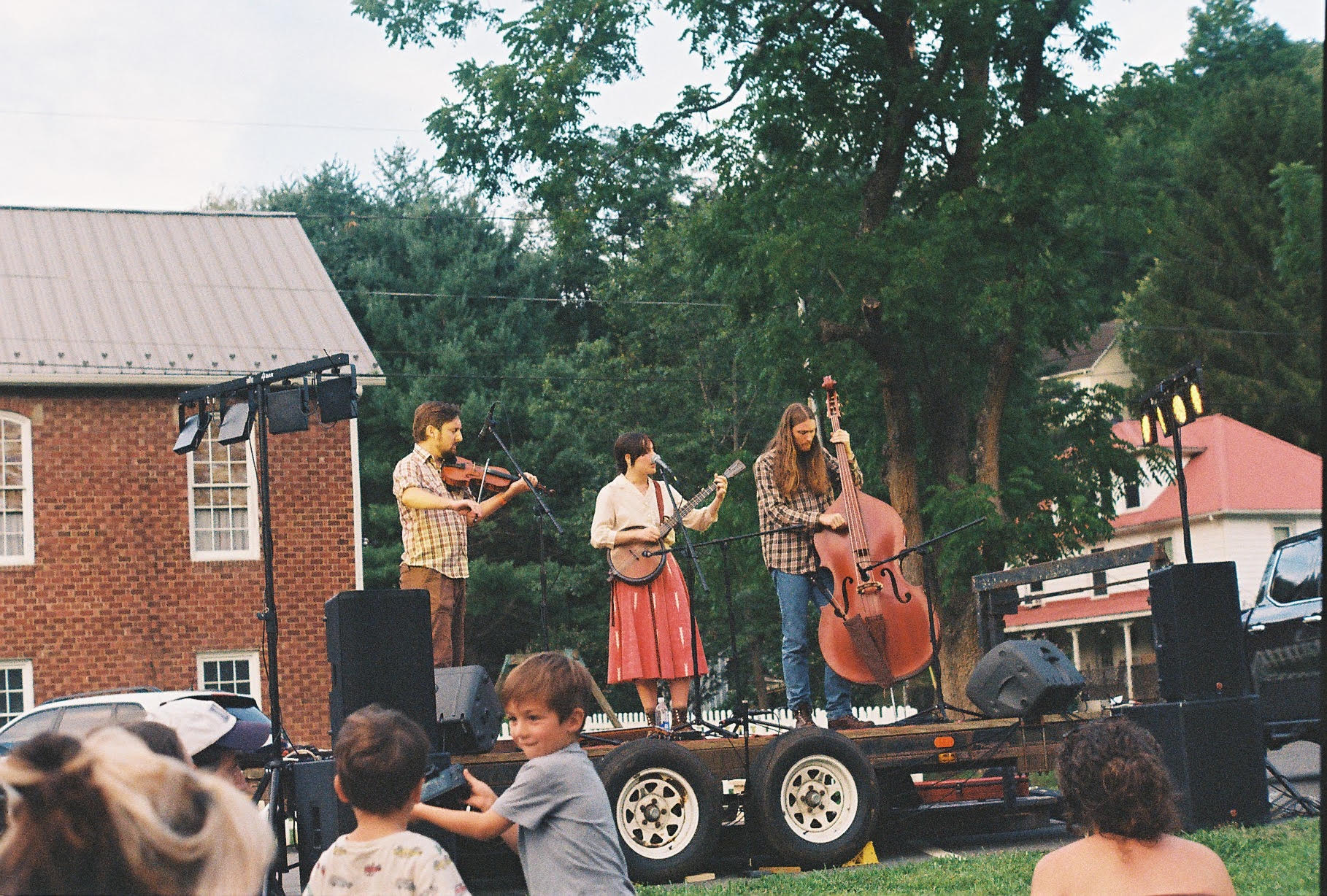
The preluding 3-act bill on Friday night each individually hit the three aspects of traditional music for me: community, storytelling, and danceability. Elsa Howell & Blackbird Pie featured Elsa’s parents on bass and father on banjo. Chris, her mother, spoke of her gratification for the unique position of supporting her daughter while working as a family. For each song, Murphy Campbell orated its history, meaning, and how she learned it. Most songs were about people dying, and most of the people she learned them from are dead. Trish Fore and the Wildcats closed out the night with incredible two-stepping energy, even though it was too dark to see my own boots.
With Saturday came a rainy morning and a cloudy, slightly chilly afternoon. Fly Around feels quiet in the right way; the main acts were introspective if not downright soft; there is no belligerent overcrowding, and as I floated in between acts, I felt as if the valley winds were gently leading me to what I was supposed to see. I was mystically sober. I sat on a stone wall weathered black and listened.
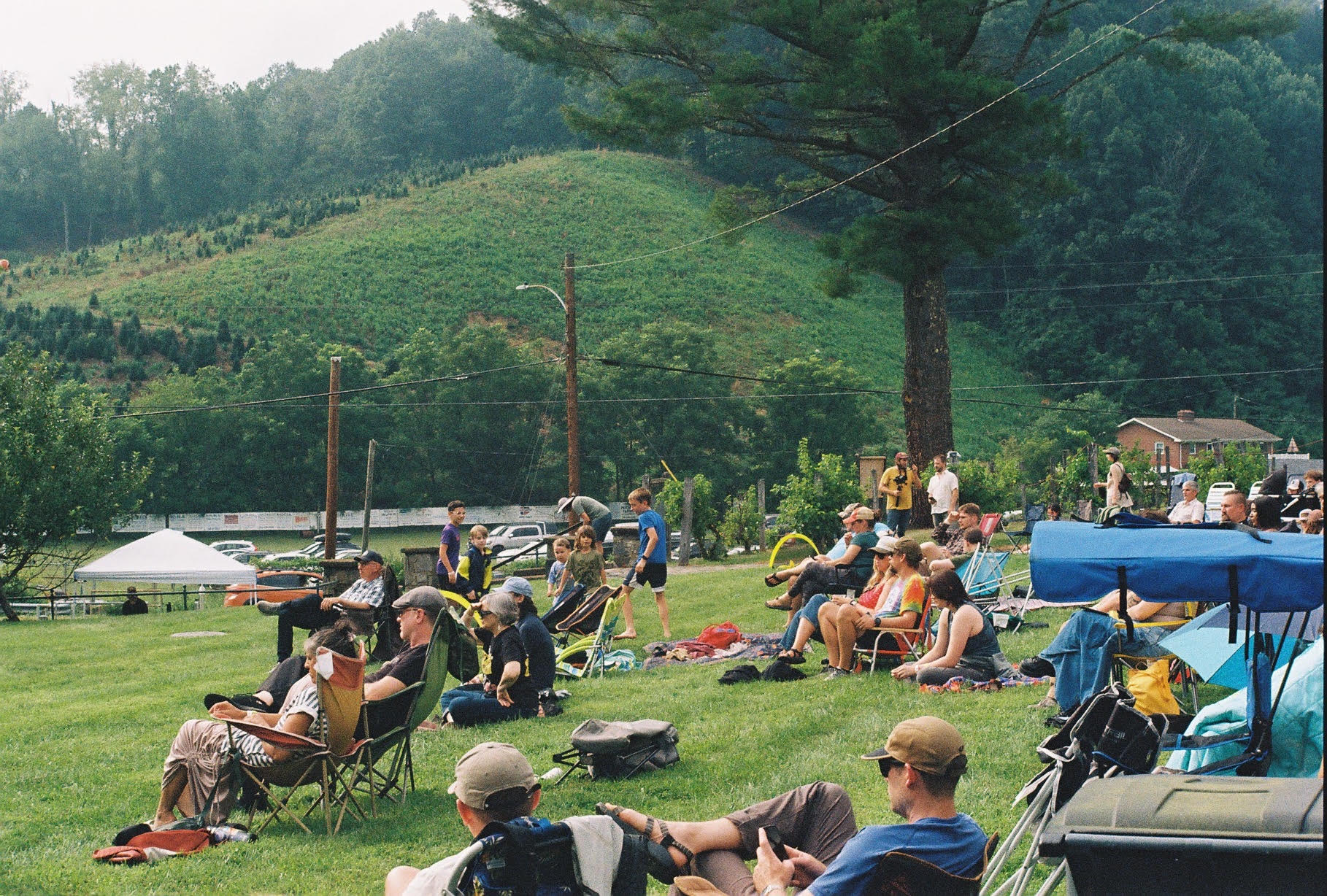
Cyrus Pireh is a solo guitarist whose fingerpicking chops speak for themselves. His timbre made my brain feel waxy, and I felt an old boyish naivety from high school. He was sitting and hunched, as if his telecaster was contorting him into the lanky player it wanted, touching its strings. Universal Light is a trio of multi-instrumentalists with the haunting ability to fill a song with space. You can’t fight fire with fire, but you can combat silence with restraint. P.G. Six was simply devastating, playing ballads across guitar, piano, and harp about loss, illness, and age. I was depressed but not sad; I felt calm in a way that I should be, nestled between deep green mountains who felt like the only eternal thing I could be with.
Folk music is about preserving the dead, and it is dying too, as if it is a wooden grave marker lugubriously decomposing into the same Cecil soil that holds the body it is meant to remember. Chris Jude, Fly Around’s lead organizer, says he likes to think of a festival lineup “like a mixtape,” mixing old-time and bluegrass with acts that push those very conventions. But these artists aren’t “revitalizing” folk with a gimmicky spin meant to appease contemporary audiences, they are folk. Each artist is undeniably grounded in tradition, and each exposit imply connects them with the music and history.
In the serenity of Jake Fussell’s performance, little black birds circled over the stage like when a character says the name of the movie. Their chirps, spanning at least a couple of songs, ornamented Jake’s earthy guitar and warm voice. It was shockingly beautiful, bringing me closer to the music rather than alienating me with metareferential irony. He was the perfect headliner because he epitomized what every other act alluded to: simplifying arrangements and focusing on specializing each aspect results in truly exceptional folk. Jake makes time feel still, as if he has been playing since the Appalachians rose from their convergent boundaries. His music is timeless, too, lit aflame like a lighthouse, proving that the shore success is not far away. People are listening.
Weirs closed the show inside the Lost Province Center. The chairs filled up, so people began peeking through the empty wall framing and sitting on the floor in front of the stage, legs outstretched. Heads began to lean onto others’ shoulders, and a warm drone from the euphonium drenched the crowd. They performed early traditional ballads, either backed by a droning ensemble or completely unaccompanied. Regardless, the coolest part of their arrangement is their dynamic swells across frantic violin bowing, impersonated timpani rolls, expression pedal use, and full vocal crescendos. When I closed my eyes, I felt afloat on waves of decibels in a sea of hundred-year-old songs.
On the drive to Lansing, I saw a figure fly above the cars on I-40. It was like a sinister Wednesday lyric. I assume the car in front of me struck him by accident, but I don’t know why he was crossing the highway in the first place, and I didn’t want to look it up either. Everything was silent except for a John Prine song traveling through my tinny AUX cable. I don’t think we’re meant to see other humans die with such violence and celerity, but I knew he was dead midair, just by the rigidity of his shoulders. So this was the context I approached Fly Around from, and I think it gave me the best experience I could have asked for. The anticipation of a concert can inspire excitement to the point of stress, and often, it can be reductive no matter the genre. The uplift and gratitude I felt was entirely inspired by the music.