
April in North Carolina is cruel. The coming heat brings weight and density to the atmosphere as buds burst forth from vibrating red clay in frenzied growth. The same plants given hope by the sun tremble in the cold night air, threatened by the possibility of frost. Clouds of pollen creep through crevices and nostrils, penetrating the surround to perpetuate life. Life proliferates by choking life. The incessant clatter of construction closes streets and gives way to a steady drone of traffic. Rather than sing, birds cry.
April in North Carolina is kind. Cold nights drift into sunshine and vegetable growth. Life thrives, and you can feel in the fashion. Eastern Box Turtles emerge from their subterranean dens, and Bloodroot peppers Piedmont. The jazz song of the Finch comes back to the treetops. Faces fill the sidewalks, and there’s music in the air.
Tonight, the music is at the Cat’s Cradle, and there’s a vibratory buzz of anticipation; I can feel it as I put makeup on my face, which is still dewed in gentle sweat in the early afternoon. Earlier in the day, in a hungover haze, I turned off NPR’s coverage of the war and turned the volume up on Boy Harsher’s “Send Me a Vision” from 2019’s Country Girl Uncut to get ready for the night ahead. The lyrics “Send me a vision/ in the middle of the night/ send me a vision/ So I don’t have to fight” ring around my cranium, arriving like a hopeful prayer.
Cat’s Cradle sits at Carrboro’s center, cornering what might otherwise appear to be a dazzled strip mall, with a pizza joint, a bank, a craft brewery, and a shoe store as neighbors. For over half a century, the venue has served as a site of refuge from an increasingly difficult world. It strikes me that there is perhaps no better venue in which to explore the vicissitudes and contradictions of life in the American South. And there’s no better band for the task than Savannah, Georgia’s Boy Harsher.
Much like life in the South, Boy Harsher’s music is harsh and jubilant, alienated and benevolent, full of contradictions. Their sounds are at once trenchant, steady, hard, and serene. There is something distinctive and instinctive about their music, which turns punk’s aggressive “fuck you!” into a more melancholic and reflective “we’re fucked,” without losing the rawness and energy of the parent genre.
Walking into the venue alongside a steady swarm of bodies, I feel like a fish in a percolator. All around me, the energy punches me like a strong hit of instant coffee. The crowd would be in place in Twin Peak’s Roadhouse—misfits, drifters, outcasts—and what a comfort that is, in the middle of a state whose history is bathed in exclusionary violence, to be around cigarette smoke and eye shadow, safe and in place in a queer body.
When the music starts and the room is flooded with strobing lights and synthesizers, the crowd breaks away from quiet desperation as their bodies become possessed by the rhythm. The first band is Permanent. Permanent sounds like flesh whipped in delight by new leather. The sounds coloring the dancefloor are coated in your favorite secrets. Distorted vocals and droning synthesizers turn the weight of industrial existence into a liberating space of transformation experienced in the body. Dance is the antidote to our Social Disease.
Next is Chicago’s Club Music. Negotiating the space between bodies between gulps of PBR, there is a curative power to this music. Pierced bodies shoulder-hipped swaying. Fragments of conversations melt in the bass. The cavernous cauldron of experimentation Club Music brings to the table reflects the troubled and troubling times that shape us while giving us visions of what it is to endure this current hellscape. Raising a crutch to the sky, a jubilant roar overtakes the crowd. For a moment, the audience feels inextricably intertwined, almost as if by acknowledging the empowerment of raising our crutches and honoring the difficulties that hold us in place, we’ve stepped over into a new grid, into a more embodied and compassionate design for living.
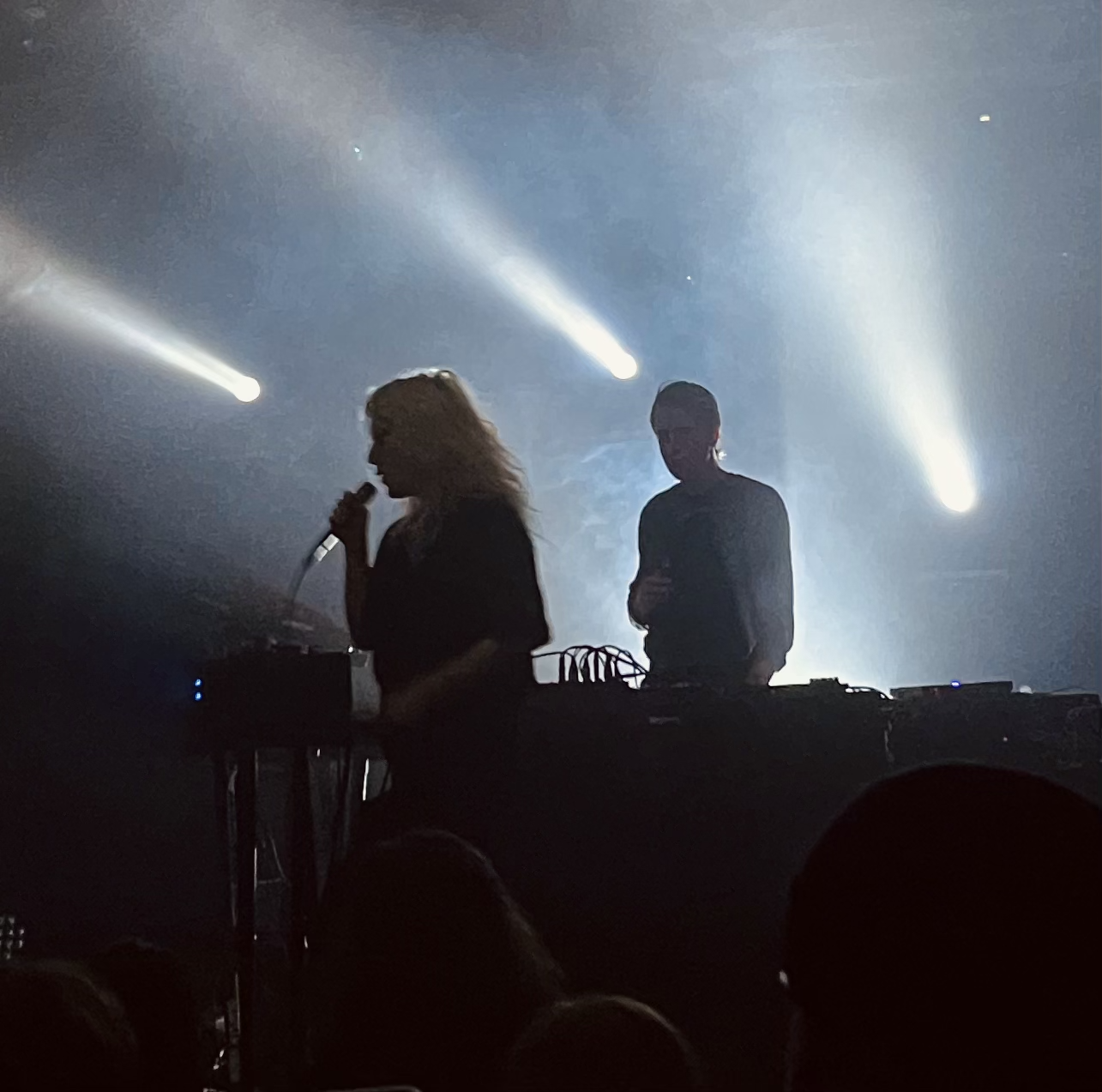
Finally, it’s Boy Harsher on the stage, and the spaces between bodies grow thinner and thinner while their undulations grow wilder and wilder. The icy texture of Jae Matthew’s voice coats the Cradle. August Miller’s production overtakes the limbs. There is an edge to Boy Harsher’s music that commands you to pay attention, rhythmic repetitions hanging between tension and suspension. The synthesizers hit you straight out in dance and aggression, in the possibility of catharsis through movement. With their music, life becomes a horror movie with all the delights of the genre: tingling spines and anticipation, the beauty of electronic rot and mold. This is profoundly physical music, in tune with uncontrollable emotions, impulses, fears, and desires. As such, it’s a profoundly human form of music within a post-human world.
The concert took place in time outside of time, making it difficult to write a review for this experience, as there is much I can only attempt to explain. Part of Boy Harsher’s success is the breadth and reach of the reactions they inspire in their audiences. Unable to intellectualize the visceral experiences of the body, I felt the music strike me in tender and underdeveloped regions of the brain—regions still raw and impressionable. At the Cat’s Cradle the night of April eighth, those reactions were joy, stimulation, and love—the possibility of life after the end of the world. By the time “Pain,” the encore, resounded, the band was fully confident and compelling, full of ephemeral terror, turning their cruelty into a deep kindness.